Negotiation training 2026: virtual client and negotiation strategy

Filip Duszczak
CEO InStream Group
- Reading time: 13 minutes
- November 15 2026

Updated: · based on the SalesBooster programme and PipeChamp exercises
A negotiation strategy is a plan that, before the conversation, sets the goal, the limits of concessions, the alternative if no agreement is reached (BATNA) and how to run the conversation with a specific client. Negotiation training with a virtual client is practice in which a salesperson rehearses this strategy in a conversation with an AI client, using a scenario from their own company’s sales process, while the trainer and the system assess every conversation.
- 1,700+ companies supported in sales
- 250+ CRM implementations
- 113+ sales process templates in PipeChamp
In short
- B2B negotiations are usually lost before the conversation: no goal, no concession limit and no alternative.
- The negotiation strategy is set by the company, not by an individual salesperson. It is written into the sales process and the CRM.
- The five basic strategies are collaboration, competition, compromise, accommodation and avoidance. In B2B sales, collaboration is most often combined with a firm price floor.
- A discount comes straight out of profit: at a 30% margin, a 10% discount takes one third of the deal’s profit.
- Negotiation is learned best through practice on your own process, for example in conversations with an AI virtual client in PipeChamp.
- At InStream Group, negotiation is part of the SalesBooster programme: process, scripts, exercises, CRM and measurement.
- Why a negotiation strategy matters
- Who is responsible for the strategy
- Negotiation methods and strategies
- How we teach negotiation at InStream
- Video: the SalesBooster programme
- Virtual client exercise
- The InStream Group method
- Impact of negotiation on results
- Good and weak salesperson
- TOP books on negotiation
- TOP talks on YouTube
- How we build the strategy with clients
- SalesBooster in 5 films
- FAQ
Negotiation strategy
Negotiation strategy: why it matters so much
B2B negotiations are rarely lost at the table. They are lost earlier, when a salesperson goes into a conversation with no goal, no limit and no alternative. Then the only tool left is a discount.
Responsibility
Who in the company is responsible for the negotiation strategy?
A negotiation strategy is a management decision written into the process, not the talent of a single salesperson. Each role has its own task in it.
| Role | Responsibility in negotiations |
|---|---|
| Management board | Pricing policy, maximum discounts, the list of trade-offs the company can offer instead of a price cut. |
| Sales director | Strategy for key accounts, approval of exceptions, monthly review of discounts. |
| Team manager | Preparing the salesperson for important negotiations, 1:1 sessions after the conversation, team exercises. |
| Salesperson | Preparation (goal, BATNA, concessions), running the negotiation, recording the agreements in the CRM. |
| CRM | A “Negotiation” stage in the pipeline, the history of concessions per client, a report of discounts given. |
Methods
Negotiation methods and strategies: the best-known approaches
Negotiation literature describes five basic strategies. The choice depends on how important the outcome is to you and how important the relationship with the client is.
| Strategy | When in B2B sales | Risk |
|---|---|---|
| Collaboration (win-win) | Long relationships, multi-year contracts, account growth. You look for solutions that create value for both sides. | Without a firm price floor it is easy to “reach agreement” at the expense of margin. |
| Competition (win-lose) | One-off deals and tenders where the relationship matters little. | A burnt relationship and a client who only comes back for the price. |
| Compromise | When both sides have similar power and time matters. | “Let’s meet halfway” is the fastest route to a discount. |
| Accommodation (lose-win) | A deliberate investment in a strategic client or a reference. | A precedent the client will use in the next negotiation. |
| Avoidance | When the terms are below your BATNA and it is better to walk away. | A lost opportunity if you leave without exploring the client’s interests. |
The Harvard method
Interest-based negotiation: separate the people from the problem, focus on interests rather than positions, look for options that benefit both sides and base decisions on objective criteria.
BATNA and ZOPA
BATNA is the best alternative you have if the negotiation ends without agreement. ZOPA is the zone where the expectations of both sides overlap.
Distributive and integrative negotiation
In distributive negotiation you split a fixed “pie”, such as the price. In integrative negotiation you make it bigger: timing, scope, payment terms, volume. A good salesperson moves the conversation from price to the other variables.
4 stages of negotiation
1. Preparation: goal, limit, BATNA, list of concessions. 2. Opening: first offer and questions about interests. 3. Exchange of concessions: always something for something. 4. Closing: summary and recording the agreements in the CRM.
Buyer tactics you need to recognise
| Tactic | How to recognise it | How to respond |
|---|---|---|
| Anchoring | The buyer opens with an extremely low figure. | Don’t calculate from their anchor. Go back to value and your own offer. |
| Salami | After agreeing on price, more “small” requests appear. | Every request has its price or a trade-off. Collect all demands before you respond. |
| Time pressure | “Decide today or we choose another supplier.” | Check your BATNA and don’t give a discount just for a fast decision. |
| Limited authority | “I still need to clear this with the board.” | Establish who decides at the start and don’t make concessions before speaking with the decision-maker. |
| “This is my final price” | Ending the conversation with an ultimatum. | Change the variable: scope, timing, payment terms. The final price is often not the final condition. |
We describe 17 techniques with example phrases, pros and cons and industry fit in our guide to negotiation techniques: methods that work in B2B sales.
How we teach
How we teach negotiation at InStream Group: PipeChamp and exercises
We don’t start with theory. We start with your company’s sales process in PipeChamp and the stage where negotiations take place. Only on that process do we build the strategy, scripts and exercises.
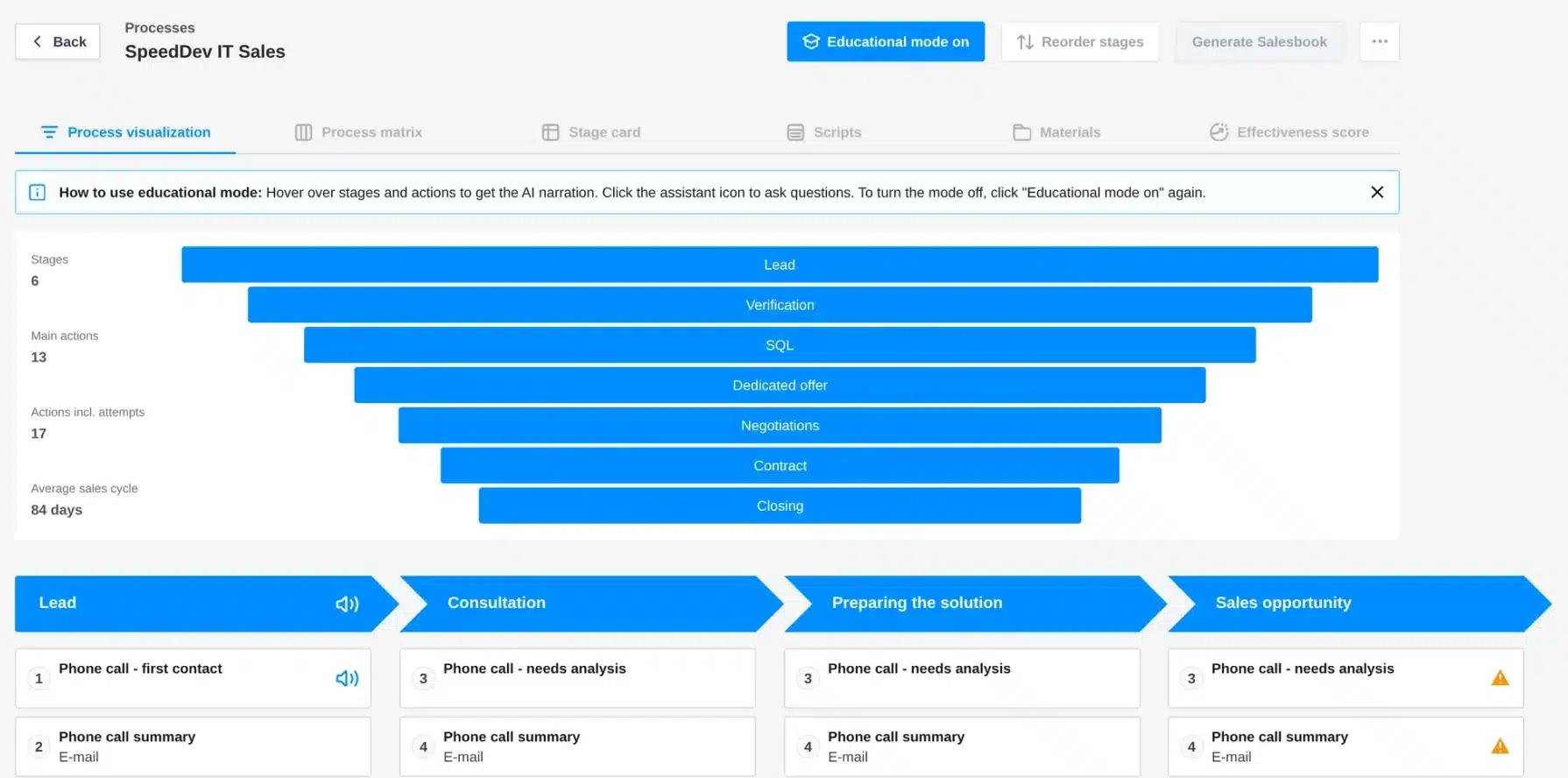
More on this approach: virtual sales process training and sales training for salespeople.
Video
See what the SalesBooster programme looks like
In SalesBooster we rebuild the sales department over four months: process, communication, team management and CRM. Negotiation strategies are part of the second pillar: consistent and effective communication.
Discover the SalesBooster programmeExercise
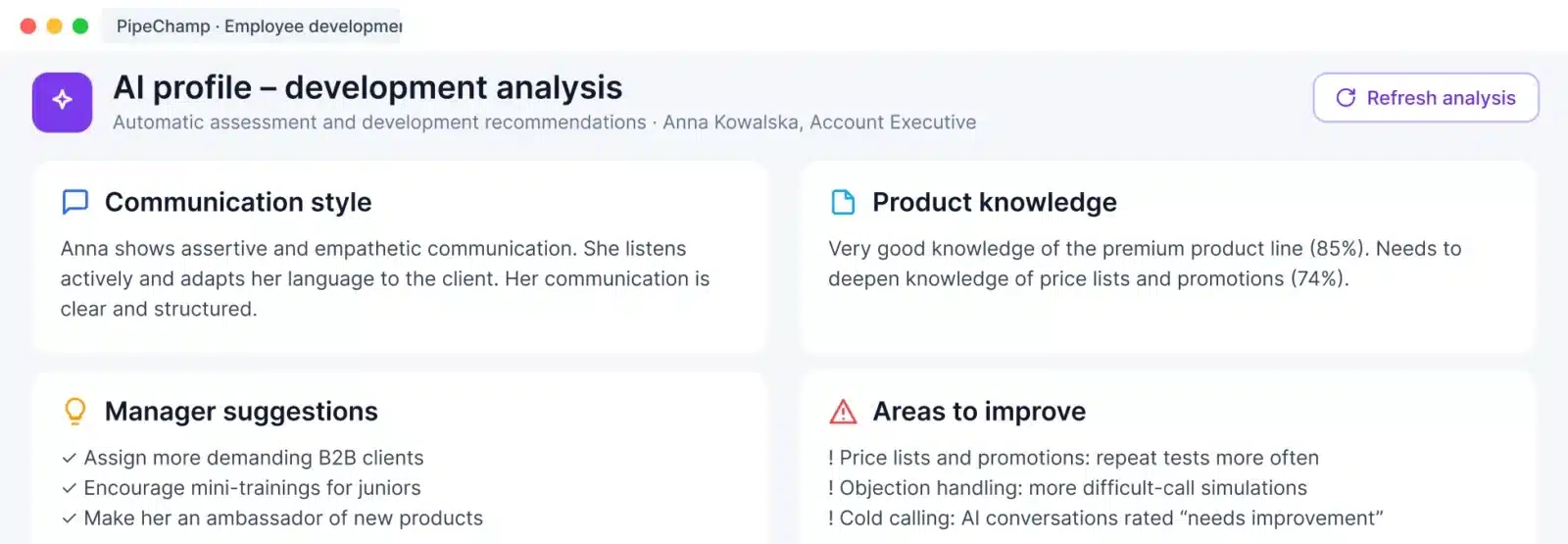
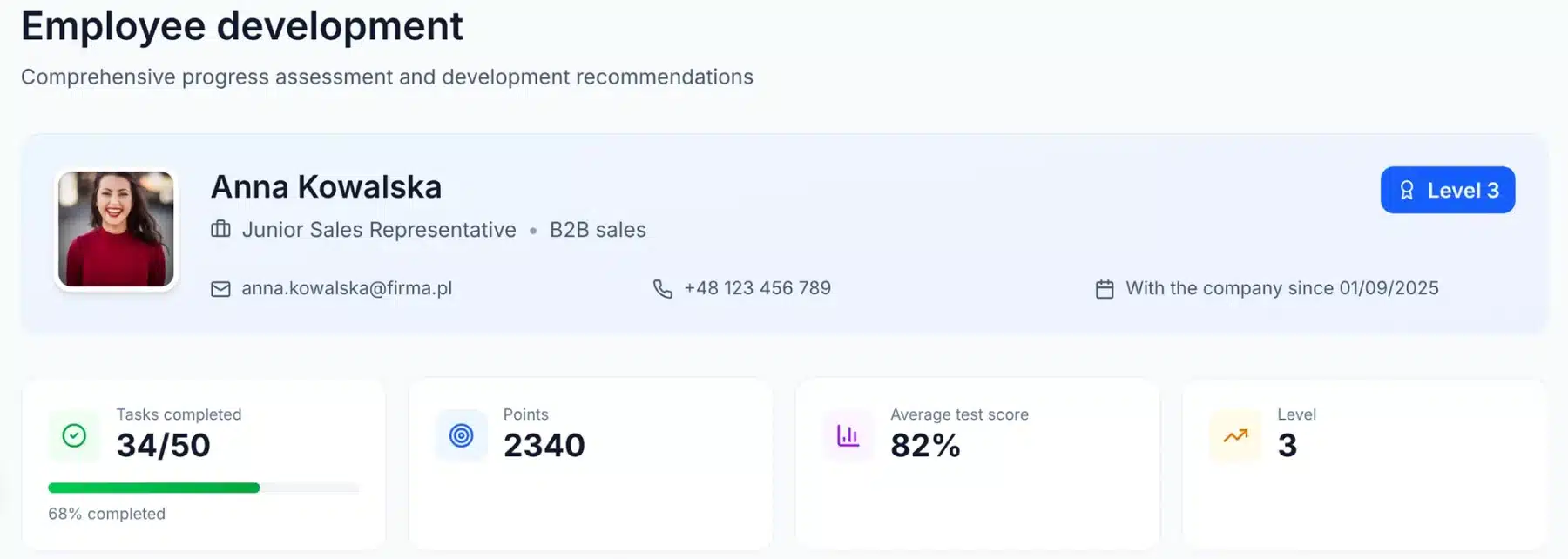
Negotiation practice with a virtual client in PipeChamp
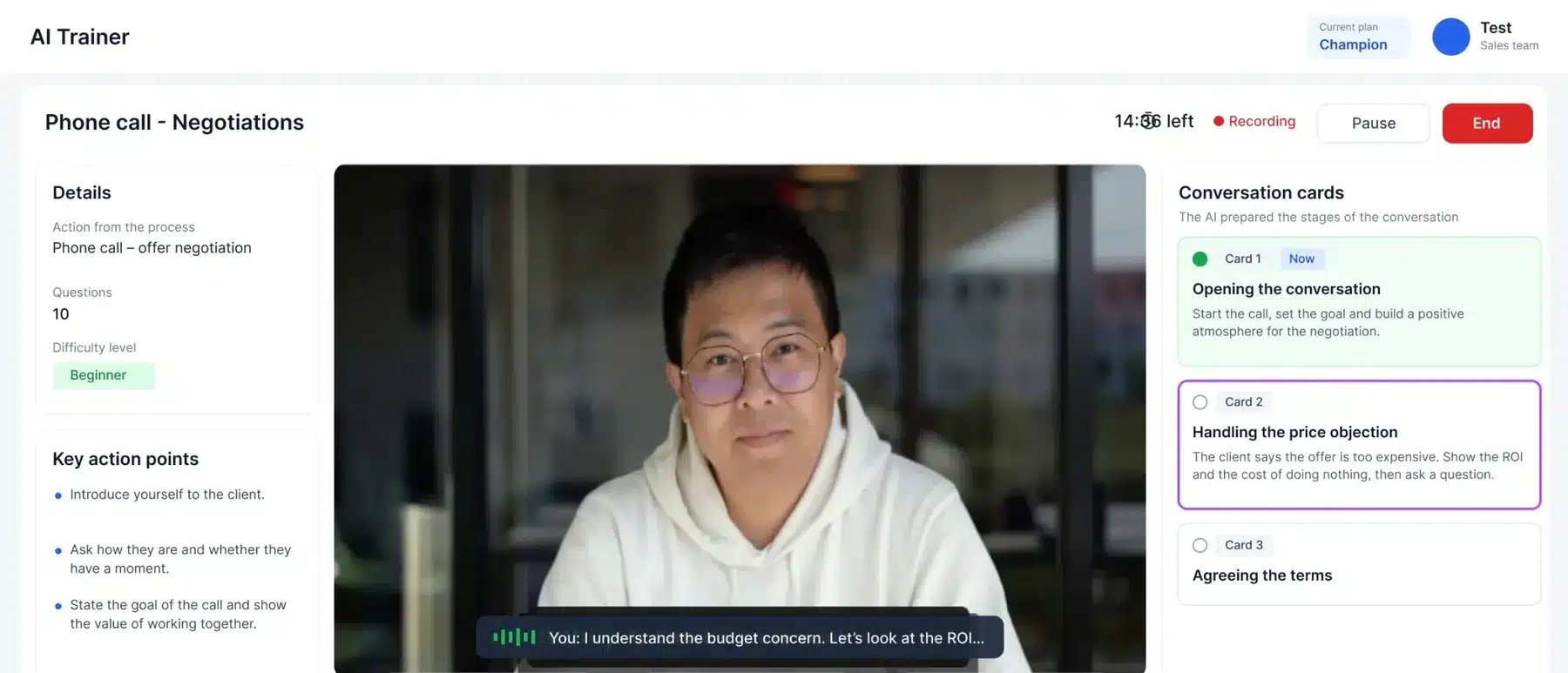
The AI virtual client plays a buyer from your industry: pushes on price, compares you with competitors, says “we have a cheaper offer”. The salesperson practises until it works, before doing it with a real client.
- 1
Scenario
You choose a scenario from the “Negotiation” stage of your company’s sales process.
- 2
Conversation
You talk to the AI virtual client, which reacts to your arguments.
- 3
Feedback
The AI trainer shows flashcards from the conversation and points out where you gave away too much.
- 4
Repeat and score
You repeat until it works and the result goes onto the salesperson’s competence card.
Today’s exercise: 3 trade-offs instead of a discount
Write down three things you can give a client instead of a price cut: faster delivery, a different scope, more convenient payment terms, a longer contract at a better rate. Practise out loud a response to “it’s too expensive” in which you offer a trade-off and ask for something in return.
Negotiation training on your process
Negotiation practised on your company’s process, not on textbook examples
In SalesBooster the team practises negotiation with a virtual client in PipeChamp, and we write the strategy into the sales process and the CRM.
- A dedicated trainer-consultant for 4 months
- Scripts, objections and a concession policy for your offer
- PipeChamp with an AI virtual client
- CRM implemented and results measured
The InStream Group method
Negotiation strategy: the InStream Group method
We build the negotiation strategy as part of the sales process in PipeChamp. This way the whole team negotiates by the same rules and every conversation leaves a trace in the CRM.
- Step 1
A stage in the process
Negotiation is a separate stage of the process in PipeChamp with entry and exit criteria.
- Step 2
Goal and limits
Target price, minimum price, BATNA and ZOPA for every offer.
- Step 3
Concession policy
A list of trade-offs before any discount and a clear rule on who approves exceptions.
- Step 4
Scripts
Responses to typical buyer moves, prepared for your industry.
- Step 5
Sparring
Conversations with the AI virtual client until the target score on the competence card is reached.
- Step 6
Recorded in the CRM
Agreements and concessions logged per client, with a monthly discount report.
- Step 7
1:1 session
Review of key negotiations with the manager and a plan for the next conversation.
Sales results
The impact of negotiation on sales results
The cheapest way to higher profit is the discount you didn’t give. The table shows how much of a deal’s profit is left after a discount at different margins.
| Margin | 5% discount | 10% discount | 15% discount |
|---|---|---|---|
| 20% | 75% of profit left | 50% of profit left | 25% of profit left |
| 30% | 83% of profit left | 67% of profit left | 50% of profit left |
| 40% | 88% of profit left | 75% of profit left | 63% of profit left |
Calculation: profit after discount = (margin − discount) ÷ margin. Example: 30% margin, 10% discount → 20 ÷ 30 = 67% of the deal’s profit.
Competences
Good and weak salespeople in negotiation
The difference is rarely talent. It is preparation and habits, and both can be practised.
| Situation | Weak salesperson | Good salesperson |
|---|---|---|
| Preparation | “Let’s see what the client says” | Goal, limit, BATNA and a list of trade-offs before the conversation |
| First offer | Waits for the client’s proposal | Opens with their own offer and justifies it with value |
| “It’s too expensive” | Immediately offers a discount | Asks what the client is comparing the offer with and what matters to them |
| Concessions | Gives them unconditionally | Always something for something: a trade-off in return for a decision or volume |
| Silence | Fills it with another concession | Holds the pause and waits for an answer |
| Client’s interests | Talks only about price | Asks about timing, risk, scope and decision criteria |
| Closing | Ends with “I’ll send the offer” | Summarises the agreements and sets the next step with a date |
| After the conversation | Notes kept in their head | Agreements and concessions recorded in the CRM |
Reading
TOP books on negotiation strategy
Six books we recommend to salespeople and sales managers. Each one teaches something different.
- The Harvard method
Getting to Yes: Negotiating Agreement Without Giving In
Roger Fisher, William Ury, Bruce Patton. The classic of interest-based negotiation and the source of the BATNA concept.
- Tactical empathy
Never Split the Difference
Chris Voss. A former FBI negotiator on calibrated questions, labelling emotions and responding to “no”.
- Power, time, information
You Can Negotiate Anything
Herb Cohen. How power, time and information decide the outcome of a negotiation.
- Gambits
Secrets of Power Negotiating
Roger Dawson. Opening, middle and closing gambits with business examples.
- Emotions
Beyond Reason: Using Emotions as You Negotiate
Roger Fisher, Daniel Shapiro. How to work with your own emotions and those of the other side.
- Influence
Influence: The Psychology of Persuasion
Robert Cialdini. The principles of influence that buyers use on you and that you need to recognise.
Worth watching
TOP negotiation talks on YouTube
Five talks worth watching before a training session, or instead of an evening series.
Cooperation
How we build a negotiation strategy with clients at InStream Group
The negotiation strategy is built across the four phases of SalesBooster. Each phase adds another element to it.
- 1
Process design
We map the sales process, the negotiation stage and the concession policy.
- 2
Environment, CRM and implementation
The “Negotiation” stage goes into the CRM together with fields for agreements and discounts.
- 3
Exercises and new habits
The team practises with the virtual client in PipeChamp and in sessions with the trainer.
- 4
Growth and sales culture
We measure results, run 1:1 sessions and embed the habits in the team.
Films
SalesBooster in 5 films
Short films on how a sales department transformation unfolds month by month.
- Sales department transformation
- Month 1: process mapping
- Month 2: CRM and workshops
- Month 3: CRM work and practice
- Month 4: numbers, growth, managers
Frequently asked questions about negotiation training
How much does negotiation training cost?
In Poland, open 1–2 day negotiation courses usually cost about €230–450 net per person, while closed in-company training is priced per training day. At InStream Group, negotiation is part of the SalesBooster programme: the version for sales teams costs €2,000 net per month for 4 months, and the Start and Mini versions are quoted individually.
What are the negotiation strategies?
The five basic negotiation strategies are collaboration (win-win), competition (win-lose), compromise, accommodation (lose-win) and avoidance. In B2B sales, collaboration is most often combined with a firm price floor and a clear list of concessions.
What are the 5 rules of negotiation?
1. Set your goal and limit before the conversation. 2. Prepare your BATNA, the alternative if no agreement is reached. 3. Talk about interests, not positions. 4. Only give concessions in exchange for something. 5. Record the agreements and the next step.
What are the 3 types of negotiation?
The most commonly distinguished types are distributive negotiation (splitting a fixed value, such as price), integrative negotiation (looking for solutions that increase value for both sides) and multi-stage or team negotiation, with several people on each side and several rounds of talks.
What are the 4 stages of negotiation?
The four stages of negotiation are preparation (goal, limit, BATNA, list of concessions), opening (first offer and questions about interests), exchange of concessions (always something for something) and closing (summary and recording the agreements).
What is a virtual client in negotiation training?
A virtual client is an AI client in the PipeChamp platform that plays a buyer from your industry: it pushes on price, compares your offer with competitors and uses typical tactics. The salesperson practises conversations with it until they work, and the AI trainer assesses every conversation.
Can negotiation training be done online?
Yes. Virtual client exercises take place in PipeChamp, and sessions with the trainer can be run remotely and recorded. On-site meetings are arranged for longer programmes.
Who in the company should take negotiation training?
Salespeople, account managers and sales managers, and for large contracts also the management board. The best results come from training the whole team on a shared process and a shared concession policy.
What is BATNA in negotiation?
BATNA (Best Alternative to a Negotiated Agreement) is the best alternative you have if the negotiation ends without agreement. The better your BATNA, the stronger your position and the easier it is to turn down unfavourable terms.
How can you tell if negotiation training worked?
Look at three indicators: the salesperson’s score on the competence card in PipeChamp, the average discount given in the CRM and the average deal value before and after the training.
SalesBooster
Want your team to stop negotiating with discounts?
We’ll show you what the SalesBooster programme looks like: sales process, negotiation strategy, virtual client exercises in PipeChamp and CRM in one 4-month plan.
- Negotiation strategy written into the process and CRM
- Virtual client exercises in PipeChamp
- 1,700+ companies supported in sales
About the author
Filip DuszczakCEO and founder of InStream Group, 17 years in B2B sales. He built a team of 70+ specialists that has supported more than 1,700 companies in sales across 40+ markets.
LinkedIn profile