
What an SDR does in practice
In many companies one salesperson does everything: finds customers, makes calls, runs meetings, prepares offers and negotiates. At a larger scale this stops working. Closing deals needs different skills from persistently opening new conversations and the time of your best salespeople is too valuable for first contacts.
- Responds to leads from campaigns and forms before they go cold.
- Runs first conversations and checks whether the company fits your ICP.
- Qualifies need, budget, decision-making power and timing.
- Books a meeting with a salesperson and hands over the full context.
- Comes back to “not now” contacts on the agreed date.
With an SDR, sales works like a relay race. The SDR passes the baton to the salesperson at a precisely defined moment: when the conversation is qualified and booked. This way everyone works where they add the most value.
In this entry: 12 tiles about SDRs
Where an SDR works in the sales funnel
An SDR is responsible for the part of the funnel from the moment a lead appears to the booked meeting. From there the salesperson who closes the deal takes the opportunity forward.
A lead that has shown interest is an MQL in funnel terms. A lead checked by an SDR and ready for a conversation with a salesperson is an SQL. We explain the difference in the MQL and SQL entry and the qualification criteria in the BANT entry.
SDR, BDR and account executive: who does what
| SDR | BDR | Account executive | |
|---|---|---|---|
| Where contacts come from | leads that have shown interest: enquiries, campaign replies | a list of target companies that do not know the offer yet | meetings from SDRs and BDRs plus referrals |
| First move | fast contact and qualification | company research and opening a conversation | discovery meeting and offer |
| Channels | phone, email, text message, LinkedIn | cold email, cold calling, LinkedIn | meetings, presentations, negotiation |
| Main metric | response time, share of leads turned into SQLs | meetings with target companies | revenue and win rate |
| Hands work over to | a qualified meeting for the salesperson | a meeting for the salesperson | a signed contract for the account manager |
Splitting the roles works when both sides share a definition of a good meeting. If an SDR books calls that salespeople see as a waste of time, the problem is not the SDR but the lack of qualification criteria. In many companies the titles SDR and BDR mean the same job. What matters more than the title is who owns the start of the funnel and when they pass the baton to the salesperson.
What an SDR's working day looks like
An SDR's day is not a series of random calls. It is a set of fixed work blocks, ordered by how quickly a lead loses interest.
Leads from the night and morning
New enquiries come first, because interest drops with every hour. The order depends on the lead's potential.
Contact sequences
Further contact attempts with people who have not replied yet: phone, voicemail, text message, email and LinkedIn at an agreed rhythm.
Qualification calls
A conversation based on a script and criteria agreed with the salespeople. Goal: check need, budget, decision and timing.
Meetings and CRM notes
A booked meeting goes into the salesperson's calendar with a note: who the client is, what they need and what to ask.
“Not now” follow-ups
Contacts postponed for later come back on the agreed date with a new reason to talk.
Review with the team leader
A short review of the day: which leads got stuck, which calls to review with the trainer, what to improve in the script.
SDR KPIs: what to measure and how to calculate it
Six metrics are enough to assess an SDR's work. For each one we give the calculation and the most common trap.
1Lead response time
How to calculateThe median time from a lead arriving to the first contact attempt in a month.
TrapSingle weekend leads distort the average, so look at the median.
2Contact made
How to calculateLeads the SDR spoke to, divided by leads handed over for handling.
TrapCounting a contact attempt as a contact.
3Lead → SQL
How to calculateLeads passed to salespeople as qualified, divided by leads in handling.
TrapA high score achieved with loose qualification criteria.
4Meetings held
How to calculateMeetings that took place, divided by meetings booked.
TrapMeasuring booked meetings instead of meetings held.
5SQL → opportunity
How to calculateMeetings after which the salesperson opened an opportunity, divided by all meetings from the SDR.
TrapNo feedback from salespeople, so the SDR does not know what to improve.
6CRM completeness
How to calculateLeads with a note, source and next step, divided by all leads.
TrapNotes left “to fill in later”.
The most important rule: judge an SDR by the quality of meetings, not by the number of calls. Activity is a means, not a result.
Test: does your company need an SDR?
Mark how well each signal fits your company. The result shows where to start.
Response time: leads wait more than a few hours for the first contact
Salespeople's time: they spend a large part of the week on first calls instead of meetings
Volume: more enquiries come in than the team can handle
Old enquiries: your CRM has contacts nobody has come back to
Ups and downs: your salespeople's number of meetings changes a lot from month to month
Target companies: you know who you want to reach, but nobody does it regularly
New salesperson: you plan to hire one and need meetings for them
Readiness: you have someone to run the meetings an SDR books
The thresholds are a practical tip from InStream Group, not a market standard. The test does not save your answers.
An SDR's first call script: an example
The fictional company Nordvell Group sells production planning software. An SDR calls an operations director who replied to a cold email campaign.
SDR · openingGood morning, I'm calling from Nordvell Group. You replied yesterday to our message about production planning. Do you have two minutes?
ClientYes, but briefly. We have a problem with scheduling.
SDR · needWhat gets in the way of planning most today: order changes, downtime or something else?
ClientOrder changes. We plan in a spreadsheet and rewrite it every week.
SDR · decision and budgetWho besides you will decide on a project like this and do you have a budget for it this year?
ClientThe board decides. The budget is planned for the second quarter.
SDR · timingBy when would you like to have a new solution?
ClientIdeally before the season, so in March.
SDR · bookingI suggest 30 minutes with our consultant on Tuesday at 10:00 or on Wednesday at 14:00. They will show you how other plants handle order changes. Which time suits you?
ClientTuesday.
The example is fictional. Questions about budget, decision, need and timing are the BANT criteria.
How we train SDRs in PipeChamp before they call your lead
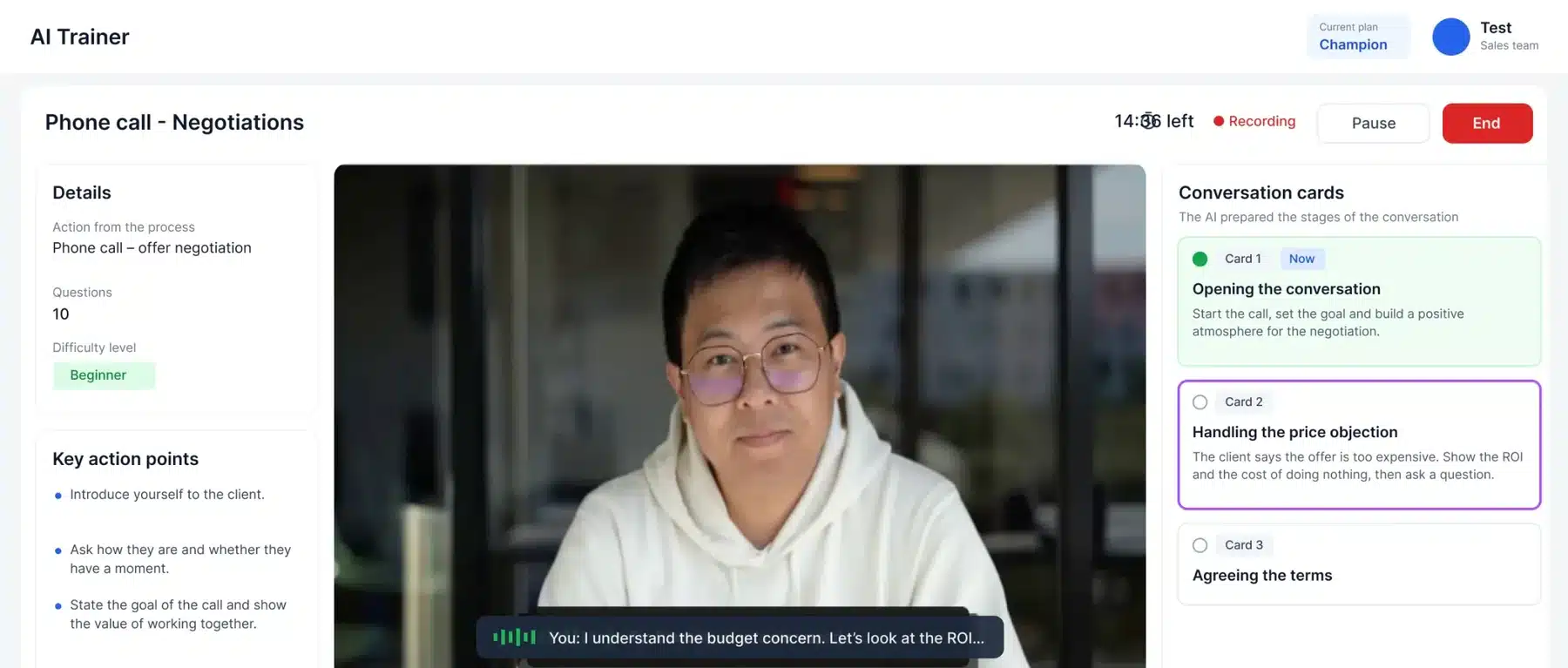
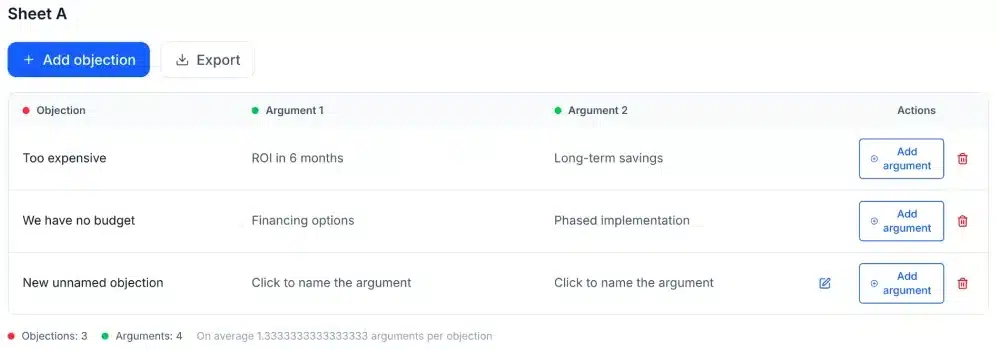
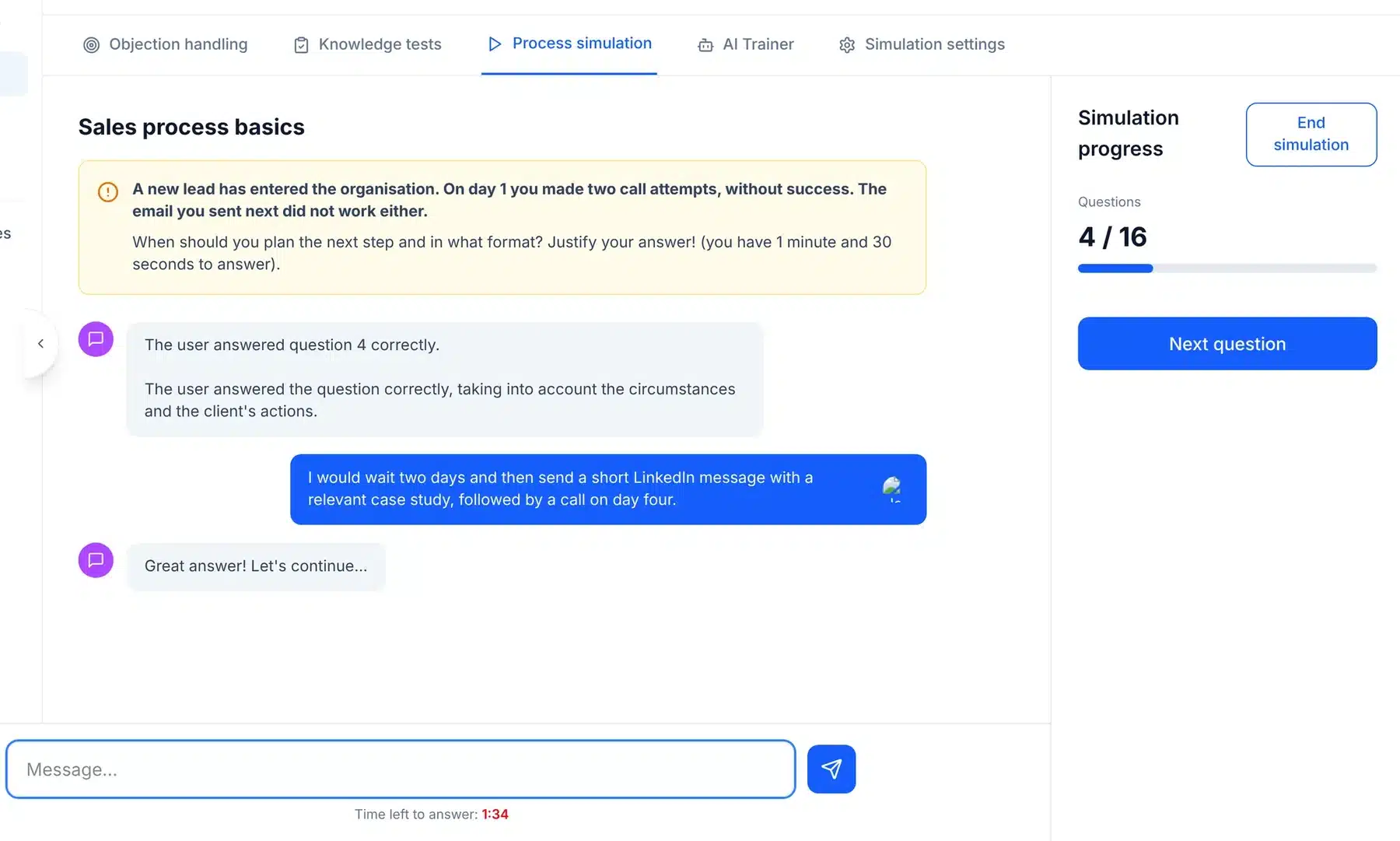
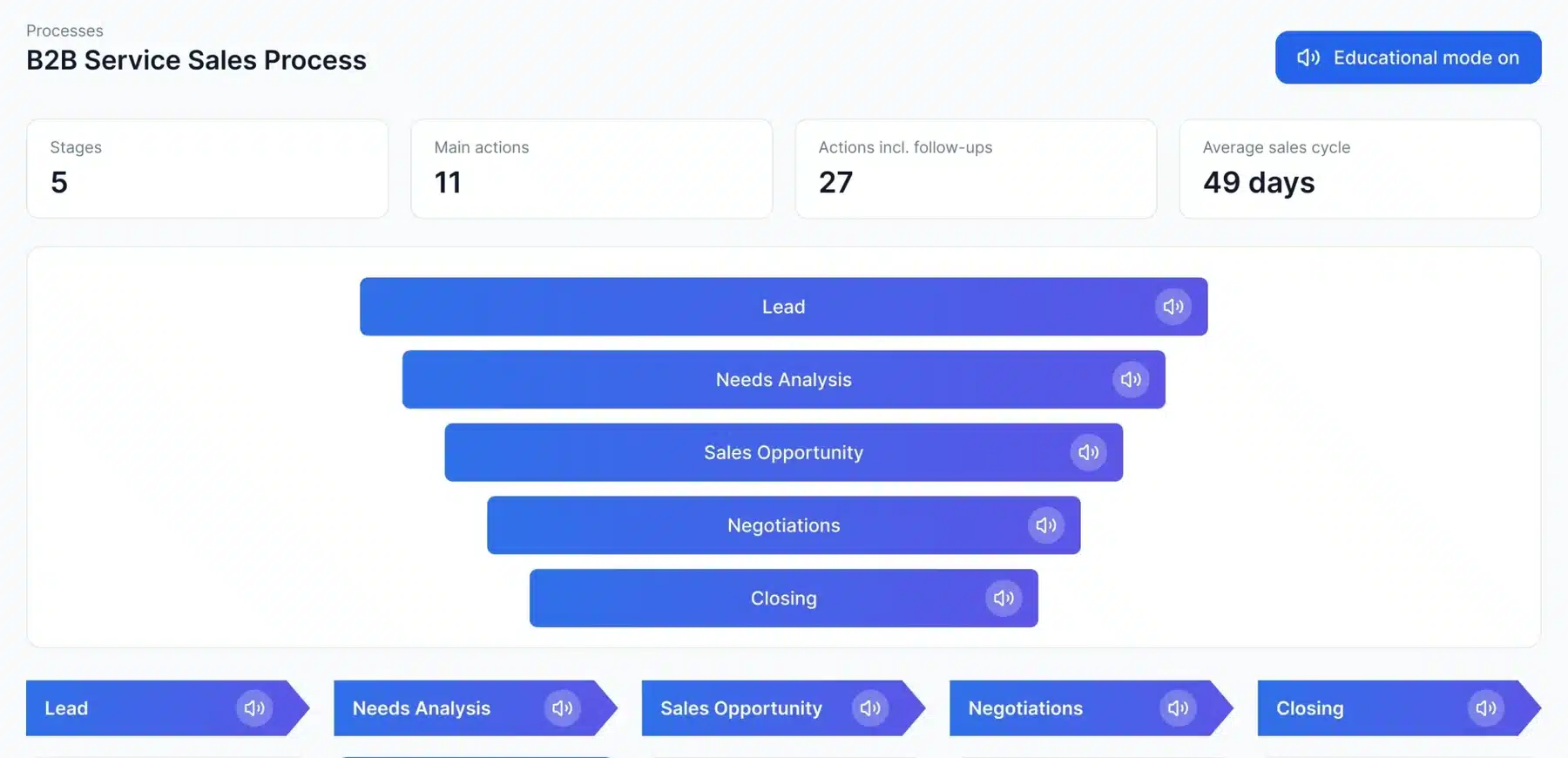
In PipeChamp an SDR practises conversations with a virtual client at a chosen difficulty level and with objections from your industry. The AI trainer scores every conversation and the objection sheet collects the best answers. You can watch and score the simulations before our team calls the first lead. Discover PipeChamp.
An in-house SDR, an SDR team from a Sales House or an AI assistant
| In-house SDR | SDR team from a Sales House | Virtual qualification (AI) | |
|---|---|---|---|
| Start | ✗ recruitment and onboarding take weeks | ✓ start in parallel with preparing the process | ✓ start once the qualification path is designed |
| Cost | salary, contributions, tools, manager's time | a subscription based on the number of leads | a subscription based on the number of leads |
| Holidays and turnover | ✗ the risk is on your side | ✓ cover within the team on our side | ✓ the assistant works around the clock |
| Training and quality | depends on your manager | ✓ trainer, call reviews, PipeChamp | ✓ the same script for every lead |
| Conversations with several decision makers | ✓ | ✓ | ✗ better handed to a person |
| More leads | ✗ more full-time roles | ✓ a package change | ✓ no extra people |
An AI assistant is good at responding instantly and qualifying against a fixed script. Complex conversations with several decision makers are still handled by a person. Our rule: technology prepares, a person approves. See the Lead Handling and Virtual Lead Qualification services.
How we work with leads: 4 short videos
Lead handling: from first contact to a meeting
Emitel × InStream: a cold email campaign
Studio201 × InStream: a campaign for a software house
Personal System × InStream: a campaign for a staffing agency
The first video shows how our team takes over a lead and hands the meeting to a salesperson. The next three are stories of clients we ran cold email campaigns for: replies from campaigns like these are what an SDR team takes over.
7 skills of a good SDR, from the most important
- Speed and order. A lead handled within minutes is a different conversation from a lead handled two days later.
- Listening and good questions. An SDR should understand the client's situation, not deliver a pitch.
- The courage to disqualify. It is better to drop a conversation with no potential than to take an hour of a salesperson's time.
- Persistence and resilience to rejection. Most contact attempts end without a conversation and that is normal.
- Notes a salesperson can use. The context of a conversation is worth as much as what ends up in the CRM.
- Knowledge of the client's industry. Enough to hold a sensible conversation and understand the problem.
- Working with sales and marketing. A shared definition of a good meeting and regular feedback.
The SDR role is often the first step in a sales career. After a year or two a well-managed SDR can move into an account executive role and the company gains a salesperson who knows the process from the first contact.
What an SDR costs: a hire, a team or an AI assistant
In-house SDR
€1,600–2,850gross per month in Poland: a base of €1,250–1,930 and commission of €340–910 when the target is met. On top of that come employer contributions, tools, recruitment and the manager's time.Compare the models →SDR team from a Sales House
Monthly subscriptionquoted individually, based on the number of leads: from the Mini package (up to 20 leads) to Enterprise (over 150). No recruitment and no full-time roles.See the packages →Virtual qualification (AI)
Monthly subscriptionquoted individually: an AI assistant qualifies leads and books meetings around the clock.See the service →Salary: Freenance, “Zarobki w sprzedaży 2026” (Sales salaries 2026), read on 19 Nov 2026, converted from PLN at the NBP average rate of 18 Nov 2026 (1 EUR = 4.4089 PLN). It is a market estimate, not a sample-based survey. InStream Group prices: 2026 price list, net amounts.
Engagement KPIs we report every month: the number of leads handed over for handling, the share of leads turned into meetings, a call quality score and recommendations for the next month. The full contact history with recordings and notes stays in the CRM.
An SDR team without hiring and onboarding
We take over your leads from the first contact to the meeting
Tell us how many leads you get per month and where they come from. We will propose the size of the SDR team and the handling rules. We will show you call simulations before we start.
Watch the demoSee the Lead Handling service →Common mistakes when working with SDRs
- No shared definition of a qualified meeting between SDRs and salespeople.
- Measuring SDRs only by the number of meetings, not their quality.
- A slow response to leads, so contacts go cold.
- Handing over meetings without notes and conversation context.
- No career path, so good SDRs leave quickly.
- Hiring an SDR before the company has a process and someone to run the booked meetings.
Frequently asked questions
What does SDR stand for?
SDR stands for Sales Development Representative. An SDR is responsible for the first contact with a customer, lead qualification and booking meetings.
What is an SDR in sales?
It is a sales team role focused on the top of the funnel. An SDR opens conversations and hands qualified opportunities to the salespeople who close deals.
What is the difference between an SDR and a BDR?
An SDR usually handles inbound leads from campaigns and forms, while a BDR (Business Development Representative) more often finds new companies and starts the contact. In many companies the roles overlap.
Does an SDR close deals?
No. An SDR opens the conversation, qualifies the lead and books a meeting. The offer, negotiation and contract are handled by the salesperson who closes the deal, the account executive.
What KPIs does an SDR have?
The key ones are lead response time, the share of contacts made, the share of leads turned into SQLs, the share of meetings held and the share of meetings after which the salesperson opens an opportunity. The number of calls is activity, not a result.
How much does an SDR earn in Poland?
According to Freenance “Zarobki w sprzedaży 2026” (read on 19 Nov 2026), an SDR's base pay on an employment contract is about €1,250–1,930 gross per month and commission for hitting the target adds about €340–910 (converted from PLN at the NBP rate of 18 Nov 2026). Employer contributions, tools, recruitment and the manager's time come on top.
When should you hire an SDR?
When salespeople cannot keep up with new leads or spend too much time on first contacts instead of meetings and negotiations. The condition: the company has a process and someone to run the booked meetings.
Can you outsource SDR work?
Yes. An outsourced SDR team takes over campaign replies, qualifies them and books meetings, while your salespeople focus on closing deals.
How much does an outsourced SDR team cost?
At InStream Group the SDR team works on a monthly subscription that we quote individually. The price depends on the number of leads handed over, from the Mini package (up to 20 leads) to the Enterprise package (over 150).
Will AI replace SDRs?
AI takes over part of the work: an instant reply to a lead, qualification against a fixed script and booking slots. Conversations with several decision makers, objections and reading the context still need a person. The best set-up: the AI assistant prepares, the SDR approves and runs the conversation.
How do you prepare an SDR for conversations with customers?
Describe the process and the criteria for a good meeting, write a script with the most common objections and practise conversations before the SDR calls a real lead. At InStream Group SDRs practise in PipeChamp with a virtual client and an AI trainer scores every conversation.
What comes after the SDR role?
Most often an SDR moves into an account executive role, a salesperson who closes deals. By then they know the process from the first contact, so they settle into the new role faster. Other paths are SDR team leader or a move into marketing.
Related terms
Sources
- Salesforce, “What is a Sales Development Representative (SDR)?” – SDR responsibilities and the role's place in a sales team.
- Freenance, “Zarobki w sprzedaży 2026”, read on 19 Nov 2026 – SDR pay in Poland.
- InStream Group 2026 price list: Lead Handling and Virtual Lead Qualification.
- PipeChamp screens: real screenshots of the platform.
- The Nordvell Group example is fictional and illustrates the conversation.
