
In short
- Lead nurturing is the process for “not now” leads: contacts who are interested but not ready to buy.
- It rests on three things: a reason and follow-up date in the CRM, content matched to the stage and contact in at least two channels.
- It ends when the lead shows buying signals and moves to a salesperson as an SQL.
In this entry: 12 tiles on lead nurturing
Where lead nurturing sits in the funnel
Nurturing starts when a contact has shown interest but does not want to talk about buying yet. It ends when the lead shows buying signals and a salesperson takes it over as a sales opportunity.
You set the boundaries between stages with criteria. We describe them in the MQL and SQL entries and the scoring of signals in the lead scoring entry.
How lead nurturing works: 6 steps
Split leads by stage and reason
A lead with no budget needs different contact than a lead waiting for the contract with its current supplier to end. Segment by stage, industry and reason for postponing.
Record the follow-up date and next action
Every “not now” lead has a specific date and a task for a specific person in the CRM. Without that, nurturing ends at good intentions.
Prepare content for every stage
Education and comparisons first, then an industry case study, a calculation and references. Content should help the decision, not push the sale.
Choose your channels
An email from the salesperson, LinkedIn, a phone call on the agreed date, a newsletter or a webinar. Two channels work better than one.
Define buying signals
A reply to a message, a request for a price, a visit to the pricing page, a new decision-maker at the company. Describe which signals move the lead forward.
Hand the lead to sales with context
The salesperson gets the contact history, the reason for postponing and what has changed. The first conversation then starts with specifics.
Your nurturing scorecard
Check whether your company has a process for leads that are not ready to buy. Choose an answer for each area. The tool adds up the score and suggests where to start.
Reason and date: every “not now” lead has a reason for postponing and a follow-up date in the CRM
Segments: leads are split by stage, industry and reason
Content: you have material for every stage (education, case studies, calculations)
Channels: you stay in touch in at least two channels
Signals: you know which behaviours mean readiness for a conversation
Handover: it is clear who hands the lead to a salesperson and when
Measurement: you track returns to conversation, meetings and opportunities from nurturing
Law: you have a legal basis for sending marketing emails
The thresholds are a practical tip from InStream Group, not a market standard. The tool does not save your answers.
A 90-day B2B lead nurturing sequence: an example
An example for the fictional company Nordvell Group, which sells production planning software. The operations director replied to a cold email: “Interesting topic, but we will come back to it after the budget is closed in March”.
| Day | Channel | What you send | Goal |
|---|---|---|---|
| 0 | CRM | Note: reason “budget in March”, follow-up date, next action | Nothing gets lost |
| 7 | A connection request with a short note referring to the conversation | A second contact channel | |
| 21 | Email from the salesperson | A case study of a manufacturing company of similar size | Proof that it works |
| 40 | A comment under the decision-maker’s post or an expert post on production planning | Presence without selling | |
| 55 | A checklist: “5 questions before choosing a planning system” | Help in preparing the decision | |
| 75 | Email or LinkedIn | An invitation to a 20-minute demo or a webinar | Checking readiness |
| 90 | Phone | A call on the agreed date with a new reason to talk | A meeting or a new date |
Adjust the intervals to the buying cycle. For a short cycle shorten the sequence, for tenders and committee decisions extend it to several months.
Lead nurturing vs follow-up, drip, newsletter and lead scoring
| Term | What it is | When you use it | How it differs from nurturing |
|---|---|---|---|
| Lead nurturing | The process of bringing a lead to buying readiness | The lead is interested but not ready | It is the whole process, the other terms are its elements or tools |
| Follow-up | Another message after no reply | In a first-contact sequence | It is a single step, nurturing lasts weeks or months |
| Drip marketing | A series of messages sent on a schedule | Education after sign-up, onboarding | It runs by date, nurturing reacts to stage and signals |
| Newsletter | A regular send to the whole list | Keeping in touch with the brand | The same content for every recipient |
| Lead scoring | Points for a lead’s fit and behaviour | Deciding when to hand a lead to sales | It measures readiness, nurturing builds it |
Test yourself: what is it?
A salesperson sends a second message because the prospect did not reply to the first. That is…
That is a follow-up: a single step in a first-contact sequence.
A lead replied “let’s talk in March”. You record the date, send a case study and come back on time. That is…
That is lead nurturing: contact matched to the stage and the reason for postponing.
A lead got points for visiting the pricing page. That is…
That is lead scoring: a readiness score that tells you when to hand the lead to sales.
Your score: 0 / 3
Nurturing after inbound and after outbound: two different paths
A lead from a web form and a lead from cold mailing are at two different points in the buying process. Companies that treat them the same way often decide after a few weeks that “the leads were weak”.
Inbound lead
They came on their own, usually already know they have a problem and are comparing suppliers. Nurturing is short: a quick reply, an offer, references and an agreed decision date.Outbound lead
They replied to a message they did not expect. Some of them are only starting to think about a change. They need more steps: a follow-up on the agreed date, educational content and contact in a second channel.In our projects, “not now” contacts from cold mailing come back as a list for warming up on LinkedIn. The two channels then work together: cold mailing gives scale and LinkedIn gives precision.
7 B2B lead nurturing channels: from the most effective
The order comes from our practice in B2B sales to companies where several people make the decision. It may differ in your industry, so measure the results of each channel.
- A personal email from the salesperson. A short message that refers to the earlier conversation and adds one useful thing: a case study, a number or a question.
- LinkedIn. A connection request, comments under the decision-maker’s posts and messages. The salesperson’s profile must look credible, because the recipient will check it.
- A phone call on the agreed date. It works best when the lead chose the follow-up date.
- Case studies and references. A story from a company in the same industry answers the question “will this work for us”.
- A webinar or a short demo. Good for leads who already understand the problem and are comparing solutions.
- Newsletter. Keeps the brand in mind across the whole list, but rarely moves a lead to a conversation on its own.
- Remarketing ads. Remind people who visited the website about the brand. They support other channels but do not replace them.
Nurturing in the CRM: reason, follow-up date, next action
Without a CRM, nurturing depends on the salesperson’s memory. When that person leaves or has a weaker month, the “not now” leads disappear together with their inbox.
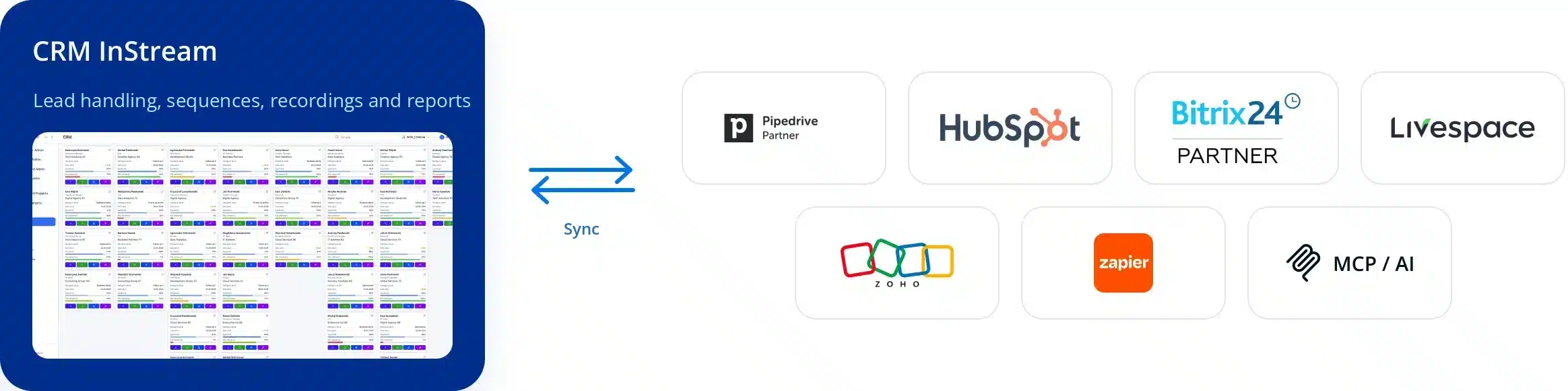
Fields worth adding to your CRM
- A “not now” status or a separate pipeline stage for leads in nurturing
- Reason for postponing from a list: budget, timing, contract with another supplier, no decision, no need
- Follow-up date and a task for a specific person
- Lead source: cold mailing, LinkedIn, website, event
- Buying signals and a lead score (lead scoring)
We implement CRM systems and automations that take manual follow-ups and data re-entry off the salesperson. We are a gold partner of Pipedrive and Livespace. See CRM implementation →
Lead nurturing in practice at InStream
One sentence keeps coming back from that analysis: “there was no one to take care of them”. The leads arrived, but on the other side there was no process, no system and no person who returns to the “not now” contacts. That is why in lead handling we record the reason for postponing and the follow-up date in the CRM, come back on the agreed date and reactivate old enquiries and former clients.
How we run sequences: 4 short videos
What Cold Mailing 2.0 is
Communication and the message sequence
Legal and technical support
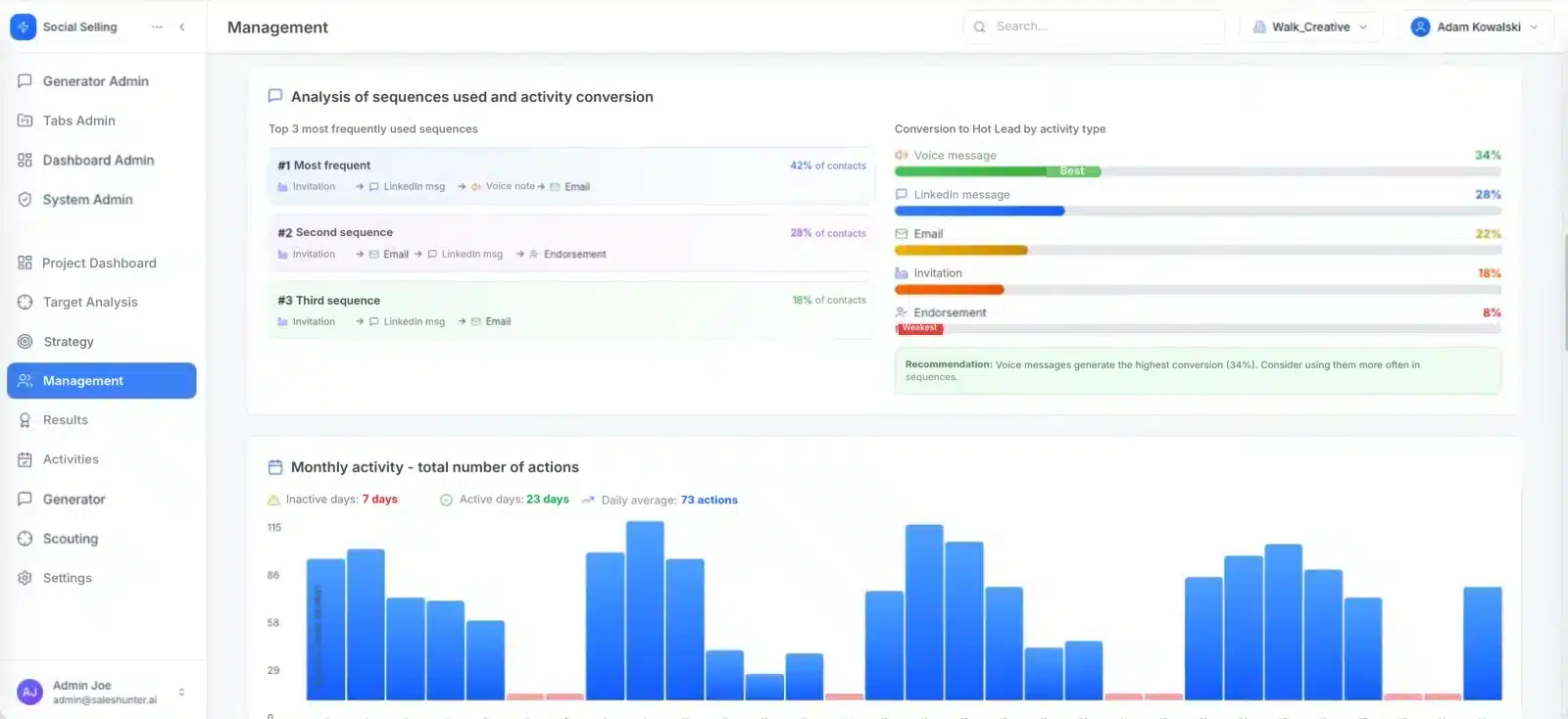
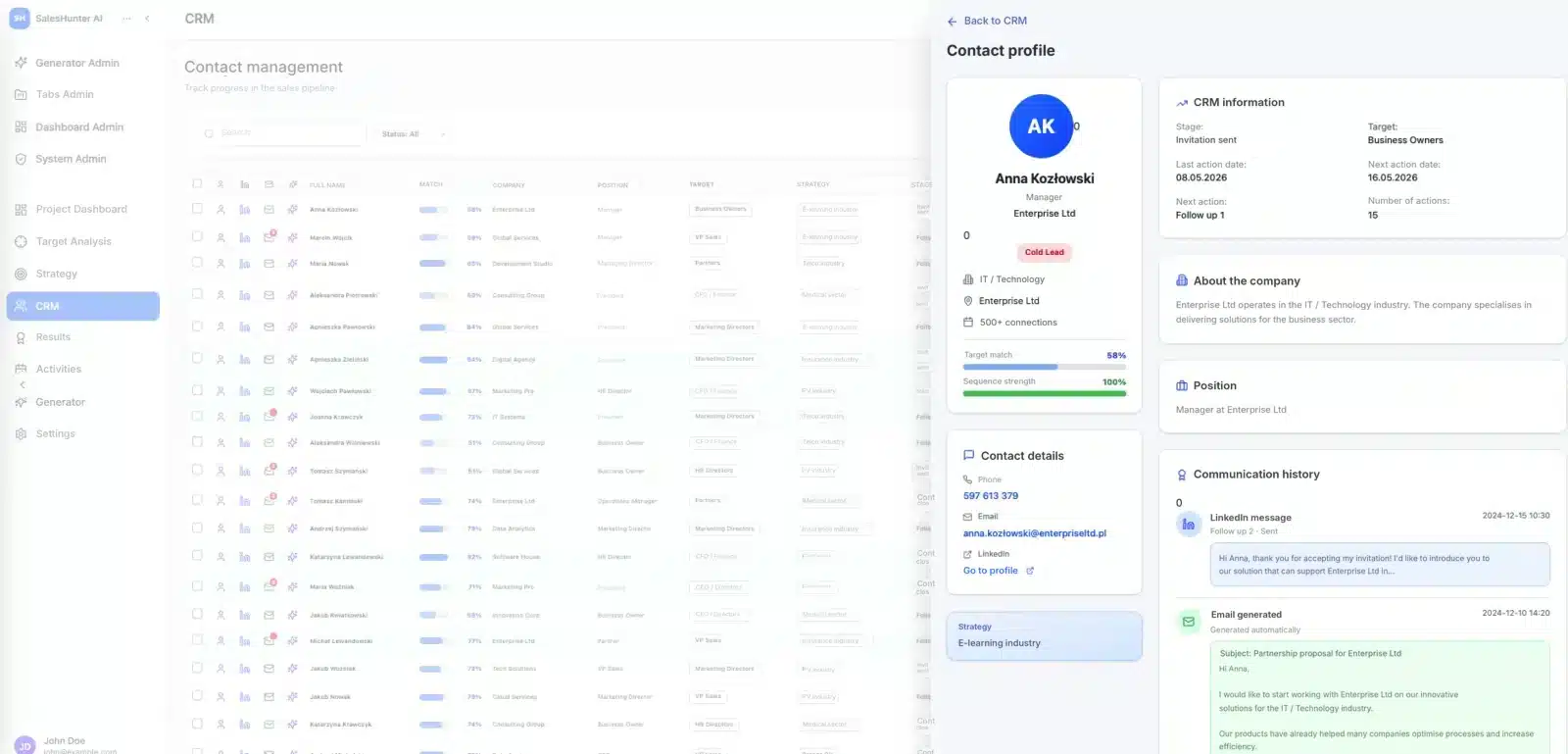
Results, client panel and CRM
What lead nurturing with us costs and what we measure
Lead handling (SDR)
Individual quotemonthly subscription priced by the number of leads: qualification, meetings and follow-ups with “not now” leadsExplore the service →Cold Mailing 2.0
from €1,700 / montha 4-message sequence, min. 5 hot leads in the contract and a client panel with conversion analysisExplore the service →Sales Booster
€2,000 / montha 4-month programme: sales process, CRM and team training in PipeChampExplore the programme →What we measure in nurturing: the share of “not now” leads with a follow-up date in the CRM, returns to conversation, meetings booked, sales opportunities and the time from first contact to meeting. Net prices, 2026 price list.
Turn “not now” leads into meetings
Do you have leads in your CRM that nobody returns to?
Our SDR team will take over contacts from your campaigns and your website: qualify them, book meetings and come back to “not now” leads on the agreed date.
Book a call about lead handlingTalk to an expert →The most common lead nurturing mistakes
- No follow-up date: a “not now” lead ends up in a note or in the salesperson’s memory.
- The same message to everyone, regardless of stage and reason for postponing.
- Messages only about the offer, with no content that helps make the decision.
- No buying signals: the salesperson calls too early or too late.
- Sending marketing emails without a legal basis.
Frequently asked questions
What is lead nurturing?
Lead nurturing is the planned process of maintaining relationships with leads who are interested but not ready to buy. It includes content, messages from a salesperson and follow-ups on an agreed date, until the lead is ready for a sales conversation.
What does lead nurturing mean in simple terms?
It means taking care of potential customers who are not ready yet. Instead of dropping a lead that says “not now”, you stay in touch with useful content until the timing is right.
What is the difference between lead nurturing and a follow-up?
A follow-up is a single additional message, usually after no reply. Lead nurturing is the whole process of guiding a lead over weeks or months, in which follow-ups are just one of the steps.
What is the difference between lead nurturing and lead scoring?
Lead scoring assesses how ready a lead is to buy by giving points for fit and behaviour. Lead nurturing builds that readiness through contact and content. Scoring tells you when to hand the lead to a salesperson.
When does a lead leave nurturing and move to sales?
When it meets the agreed readiness criteria, for example it asks for an offer, names a decision date or accepts an invitation to a call. Marketing or an SDR then hands it to a salesperson as an SQL together with the contact history.
How long does B2B lead nurturing take?
As long as the customer’s buying cycle. For simple services a few weeks is enough, for committee decisions and tenders several months. The follow-up date agreed with the lead matters more than the length.
Which channels work best for B2B lead nurturing?
Most often a personal email from the salesperson, LinkedIn, a phone call on the agreed date, case studies, webinars and a newsletter. A combination of at least two channels works best.
Is lead nurturing just email marketing?
No. Email is an important channel, but nurturing also includes LinkedIn, phone calls, meetings, website content and webinars. What matters is matching the contact to the lead’s stage, not the channel itself.
Do you need marketing automation for lead nurturing?
Not at the start. A CRM with the reason for postponing, the follow-up date and a task for the salesperson is enough. Automation helps with a large number of leads, but it will not replace well-prepared content and conversations.
Do you need consent for email nurturing?
You need a legal basis to send marketing emails. In the EU this is governed by the GDPR and national e-privacy rules. In Poland, Article 398 of the Electronic Communications Law has applied since 10 November 2024. If in doubt, check your consent process with a lawyer.
How do you measure lead nurturing effectiveness?
Measure sales results rather than email opens: the share of leads that returned to a conversation, the number of meetings and opportunities from nurturing and the time from first contact to meeting.
What should you do with a lead that replied “not now”?
Thank them, ask about the reason and a good time to follow up, record both in the CRM and schedule a task. Until then, send content that matches the reason. On the agreed date, come back with a new reason to talk.
Related terms
Sources
- Polish Electronic Communications Law of 12 July 2024 (Journal of Laws 2024, item 1221), Article 398 (in Polish): rules for sending commercial information, accessed 19 Nov 2026.
- InStream Group data, service standards and price list 2026 (Cold Mailing 2.0, Lead handling, CRM implementation, Sales Booster).
